There's No Phantom Capacity. Carriers Just Parked Their Trucks.
The US-Mexico capacity squeeze isn't phantom. It's parked equipment, revoked B1 visas, and shippers calling carriers back directly as tariffs lift and the market picks up speed.
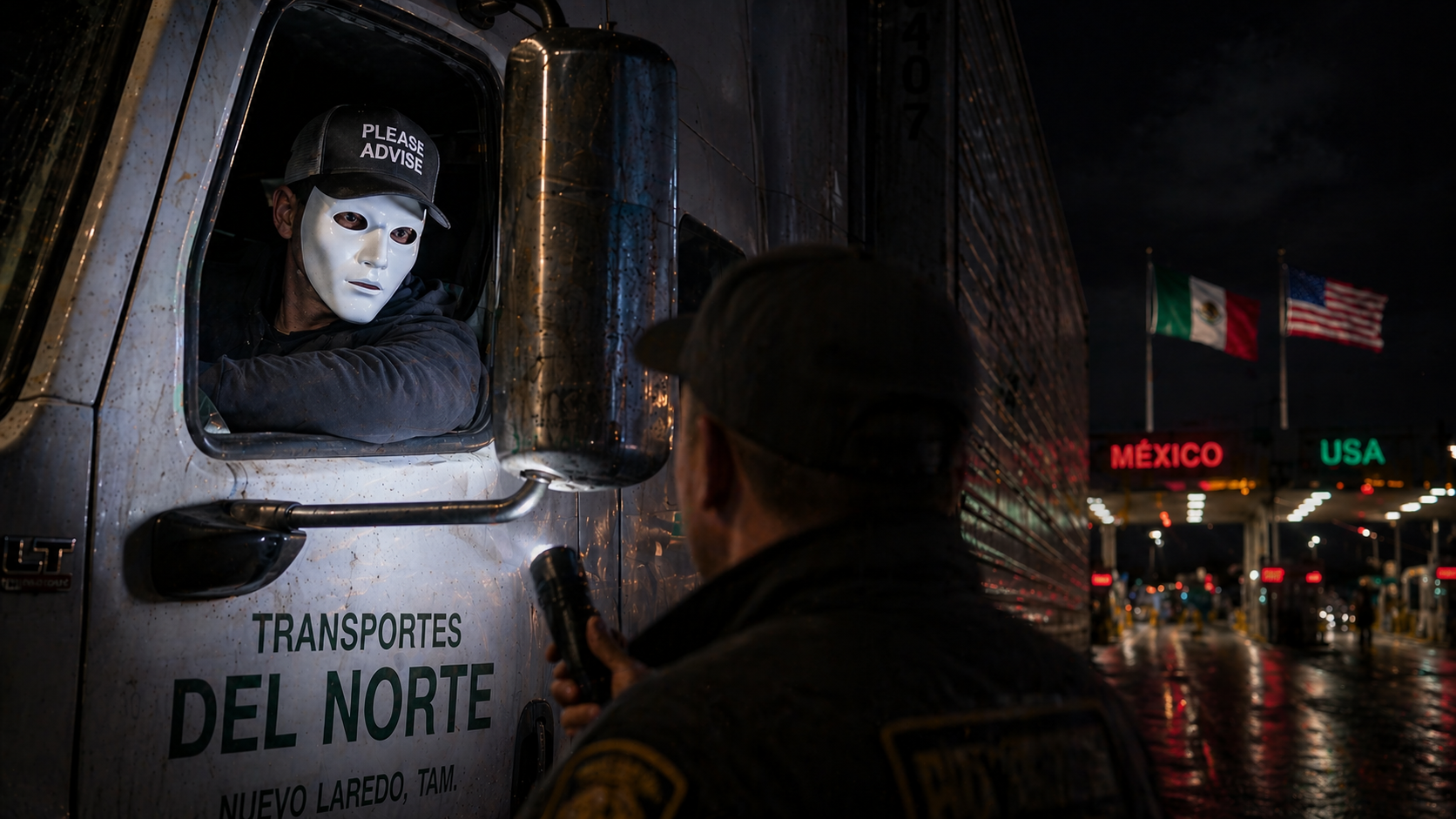
Over the past 24 hours, I’ve heard the term “phantom capacity” enough times that it’s worth addressing directly.
This isn’t meant to call anyone out. I just kept getting the same question — what is phantom capacity, what’s actually happening to capacity in Mexico cross-border right now — and decided it was easier to write down what I’m seeing than to answer it one DM at a time.
The framing has a kernel of truth. Mexico cross-border is messy. Cargo theft is real. C-TPAT and qualified-driver requirements are real. And yes — you can have “capacity” on paper that doesn’t actually show up when you need it.
But “phantom” is the wrong word, and it’s the wrong word in a way that lets the industry off the hook.
Phantom implies sketchy. In trucking, when we say phantom carrier, we usually mean fraud — double-brokered loads, stolen MC numbers, freight that gets picked up and never delivered. That is a real problem in cross-border. But it is not what's actually happening to capacity right now.
What's happening is something more specific and more knowable than ghosts. Three things are unfolding at once. None of them are mysterious.
Cabotage enforcement is shrinking the qualified driver pool
I wrote about this back in Issue #62 — B1 visa drivers are a core part of the North American supply chain, not the enemy. They are the engine of US-Mexico trade, literally and figuratively. The cross-border supply chain that moves close to $800 billion in goods between the two countries every year runs on B1 capacity at the border. Without B1 drivers, you don't have cross-border trucking — you have a parking lot in Laredo and another one in Nuevo Laredo with no way to bridge them.
Look at the carrier base we've onboarded in Laredo and the lean is unmistakable. More than two-thirds of those carriers run majority-B1 fleets. More than 40% run entirely B1 — zero CDL drivers on staff. Only about 8% run an exclusively CDL fleet. The carriers showing up to move Mexico freight are, overwhelmingly, B1-driven operations. That is not a quirk of our network. That is what the cross-border carrier base actually looks like.
Here is the uncomfortable part. A small number of carriers have been running their B1 drivers on purely domestic US loads by picking off freight in the US market. That is cabotage. It is illegal. It always has been. For years the enforcement was loose enough that some operators built parts of their business model around it — and undercut every carrier that played by the rules. Hell, even carrier reps have been known to say “my carrier commits cabotage so I can get them way under market going into San Antonio!”.
That era is ending. Drivers caught running domestic loads have been losing their B1s. The crackdown is not theoretical anymore. The driver still exists. He just cannot legally pull the freight he was illegally pulling a year ago. And good. The few who broke the rules were ruining it for everyone else, and one way or another, the government knows those drivers committed cabotage. They deserve to lose their ability to participate in one of the most lucrative trade lanes in North America. The carriers that knowingly dispatched them deserve the same.
And now there’s a second layer that’s even messier: multiple carriers are reporting that CBP is confiscating / revoking B1 visas at the border without giving a specific justification. In one Laredo ops group chat, the number circulating was 70+ visas revoked over a weekend, with CBP officers saying their system simply shows Department of State notes instructing revocation — no detail, no explanation, just “revoked.”
If that holds, it will show up exactly the way everyone describes “phantom capacity” showing up: bids softening, longer response times, and brokers feeling like trucks just disappeared. Except again — it isn’t phantom. It’s policy, enforcement, and paperwork.
This is not a security story. It is a US enforcement story. And it acts on the qualified driver pool exactly the way "phantom capacity" is supposed to — except it has a name, an agency, and a paper trail.

Carriers are upside down on truck notes and parking equipment
Every cross-border carrier I talked to in Laredo recently is running a smaller fleet than they own. The math is the same one yard to the next: a 20-truck operation now runs 12. The notes were written when used Class 8 sleepers were $70K–$80K in 2022; today the same trucks sell at auction for $20K–$25K. Rates have not moved enough to service the original payment schedule, and refinancing is not on the table when the underlying asset is worth half what it was. The trucks that are paid off keep running. The financed ones get parked, plated, and left to wait.
Parking a truck does not stop the bleeding. Insurance, transponders, ELD subscriptions, plate and FMCSA registration fees — they keep billing whether the truck rolls or not. Fleets are eating those fixed costs to avoid the bigger loss of running a truck below its operating cost.
This is not phantom capacity. This is balance-sheet capacity. The trucks are tagged, titled, and sitting in a row. They will come back when rates move or the notes get refinanced. Until then, they are off the board.
Shippers are coming back to their carriers directly
The same carriers are showing up. They're just bidding less — and on more concentrated freight.
Here is what's driving it. With tariffs being canceled and the cross-border market picking up speed again, shippers are calling their carriers back directly. The phone calls that went to brokers during the uncertain stretch — when shippers wanted optionality and didn't want to commit — are going back to the carriers shippers already know and trust. The freight is coming back. It's just coming back direct.
If you talk to a Mexican carrier with a strong customer book right now, you'll hear it. They aren't bidding on the board the way they were six months ago. They're cherry-picking. They open a load, they look at the rate, they look at the lane, and most of the time they pass — because their trucks are already filling up from inbound calls. The bid that would have come in last fall doesn't come in now, not because the carrier is gone, but because the carrier is full.
The same pattern shows up across our network. The carriers we know are still active. They're still logging in, still opening loads, still here. But they're being selective in a way they weren't a few quarters ago, concentrating their attention on the lanes and customers that work for them.
The cleanest read: carriers are not disengaged. They are full. They are taking direct shipper freight first and only bidding on broker freight when they have leftover capacity. The "shortage" brokers feel is partly just shippers and carriers reconnecting on volume that always belonged in those direct relationships.
So what does this actually mean for shippers and brokers?
If you're a shipper, the lesson is not to hire a security consultant. The lesson is to know the financial state of your carrier base. Which of your contracted carriers are running at break-even? Which ones parked trucks last quarter? When you're competing for capacity, you're competing against direct shipper relationships — not phantoms.
If you're a broker, the question is sharper: how do I become the broker a carrier wants to bid first when the shipper hasn't already called them directly? That is a relationship question, a payment-terms question, and a "do you actually understand my freight" question. It is not solved with another mini-bid or a tighter routing guide.
The deeper point
"Phantom capacity" is a useful term when you don't want to name causes. It implies the squeeze just sort of happened — that capacity evaporated because of forces nobody can see. But the forces are visible. Visa enforcement has names and dates. Truck notes have payment schedules. Carrier behavior in a marketplace has a measurable signature.
The capacity is not a ghost. It is parked, repossessed, or already booked direct by a shipper who picked up the phone. The sooner the industry says that out loud, the sooner anyone can do something about it.
We are going to keep watching it inside Cargado. Carrier behavior in a live marketplace is one of the cleanest signals we have on whether the cross-border market is actually getting tighter or just getting more selective. If you want to see what real cross-border capacity looks like in real time, that is where it is.